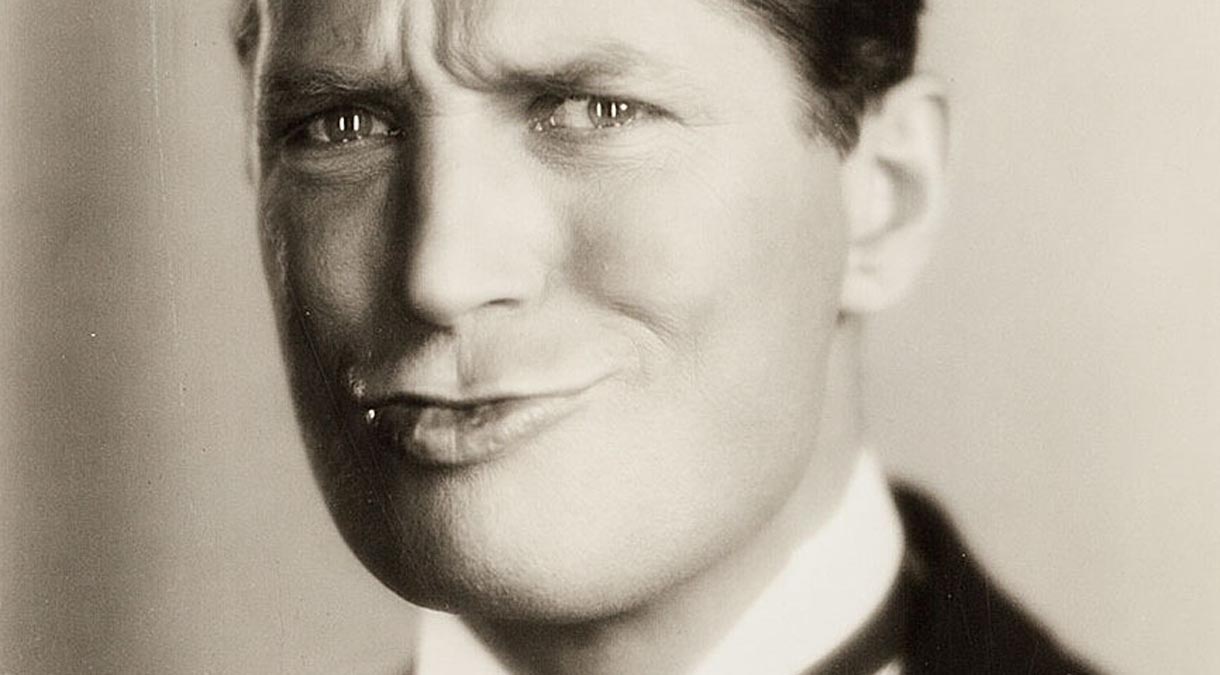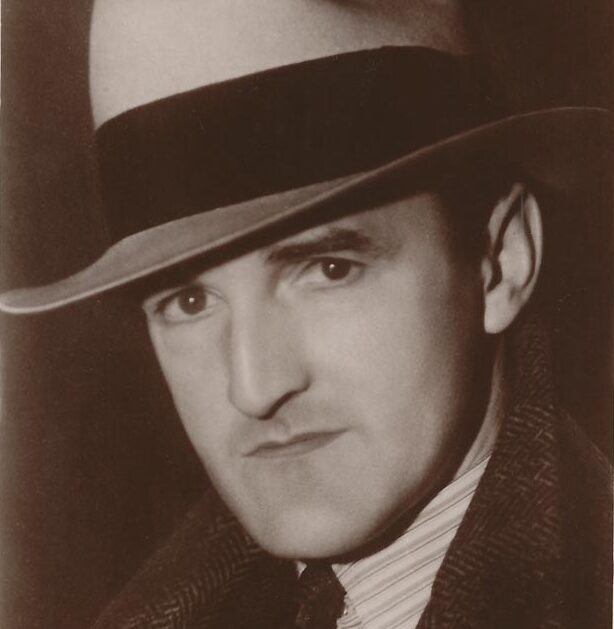
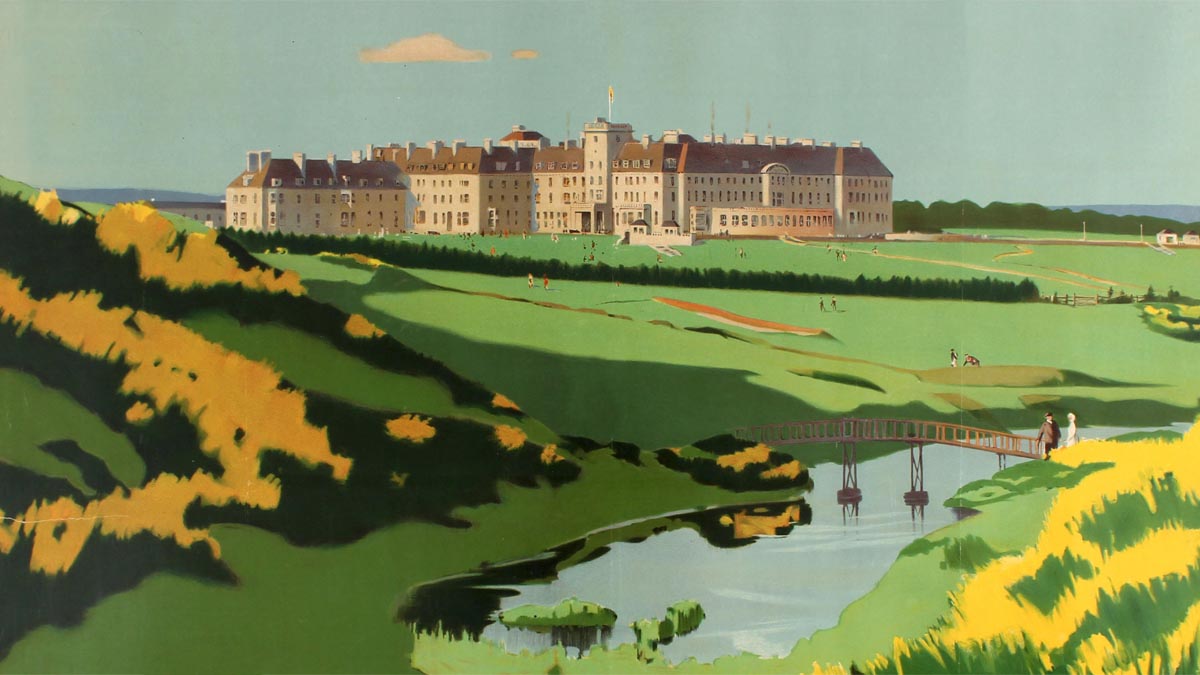
“Come Ye Back to Bonnie Scotland” was the signature tune of Henry Hall and His Gleneagles Hotel Band. Hall had formed the band at the LMS Gleneagles Hotel in Perthshire, Scotland when it opened in 1924. They were frequently resident at the Adelphi Hotel in Liverpool and the Midland Hotel in Manchester during the off-season, but they always associated themselves first and foremost with Gleneagles.
The controller for LMS Hotels was one Arthur E. Towle, CBE, whose wife, Margery Lawrence, a fiction writer, penned the lyrics to “Come Ye Back to Bonnie Scotland.” Hall himself wrote the tune and arranged it. He had studied music at Trinity College of Music and had experience composing hymns for the Salvation Army.
“Come Ye Back to Bonnie Scotland.” Words by Margery Lawrence, music by Henry Hall (1931). Recorded in London on October 11, 1931 by Henry Hall and His Gleneagles Hotel Band. Decca F-2614 mx. GB-3431-1.
Personnel: Henry Hall-sp-a dir. Eddie Cromar-as-bar-vn / Cyril Wookey-cl-as-vn / Burton Gillis-cl-ts / Henry Reed-p / Theo Farrar-sb / Arthur Haydock-d-vib / Maurice Elwin-v
“Come Ye Back to Bonnie Scotland (1931)
(Transfer by Henry Parsons)
We can hear Henry Hall’s gentle voice announce the tune “Come Ye Back to Bonnie Scotland” at the beginning of the recording on Decca F-2614; he does so as if for a radio broadcast. Then the orchestra comes in, loudly approximating the sound of bagpipes. Allusions to native Scottish music are not entirely rare in British dance band recordings, but the use of strings to imitate woodwind instruments would be a clever effect in any context.
It is arguably the voice of Maurice Elwin that gives this song its greatest source of Scottish authenticity. Born in Uddingston and educated in Glasgow, he was one of the Scottish voices most frequently heard on British records. What he does with the vocal refrain is impressive. While I do not wish to be too hard on the lyricist, the words that made it into this arrangement are little more than a laundry list of northern topographical details. And yet Elwin, singing them softly, as if solemnly and reverently assessing the natural beauty of his native region, produces an effect that is deeply moving. I am not the first to observe Elwin’s ability to convey sincerity, but here he evokes a sense of longing that is less evident in his other dance band recordings. It is as if the music, which is unusually pretty, has given Elwin the opportunity to show off a new facet of his art.
Decca F-2614 was among the last records that Hall released whose label mentioned the Midland Hotel, Manchester. We can see that the label of Decca F-2777, which has take 4 of “Come Ye Back to Bonnie Scotland” on it, lacks the hotel reference:
“Come Ye Back to Bonnie Scotland.” Recorded in London on January 10, 1932 by Henry Hall and His Gleneagles Hotel Band. Decca F-2777 mx. GB-3431-4.
Personnel: Henry Hall-a dir. Eddie Cromar-t-as-bar-v / t / tb / Cyril Wookey-cl-as-vn / Burton Gillis-cl-ts / Henry Reed-p / Theo Farrar-bb-sb / Arthur Haydock-d-vib / Maurice Elwin-v
“Come Ye Back to Bonnie Scotland”
(Transfer by Henry Parsons)
Note that the matrix for this recording is the same as for the previous transfer, even though the two were recorded three months apart. Take 4 was originally used for late issues of Decca F-2614 and later assigned to F-2777. It is understandable that Decca treated it as a remake, as it is very similar to the original. It lacks Hall’s announcement at the beginning, and Henry Parsons has pointed out to me that the tenor sax is featured prominently after the vocal — an anticipation of a slightly later trend in US dance band arrangements.
Elwin seems to sing the refrain with greater boldness in this take. I would be tempted to attribute the difference to microphone placement, but we happen to know that Elwin was obsessed with his physical relationship to the microphone,1 so any difference in vocal character was probably intentional. Personally, I prefer the earlier take as being slightly more subtle.
Around the time that the new take of “Come Ye Back to Bonnie Scotland” was recorded, Henry Hall was negotiating to become the BBC’S new bandleader. Jack Payne was about to end his tenure there, and Hall would begin broadcasting with his new band in mid-March. There would be no more Gleneagles Hotel Band, but it is nice that they managed to record their signature tune before being disbanded. They were not the only ones to do so, though; there exists a January 1932 recording of “Come Ye Back to Bonnie Scotland” by the Savoy Hotel Orpheans, then directed by Howard Jacobs, with vocalist Anona Winn. There is also a solo recording of the song by Maurice Elwin on Zonophone 6072.
- Maurice Elwin, “Some Truths About Microphone Singing,” Rhythm, March 1934, 33. ↩︎