
Percival Mackey

“I Fell for You” (1930)

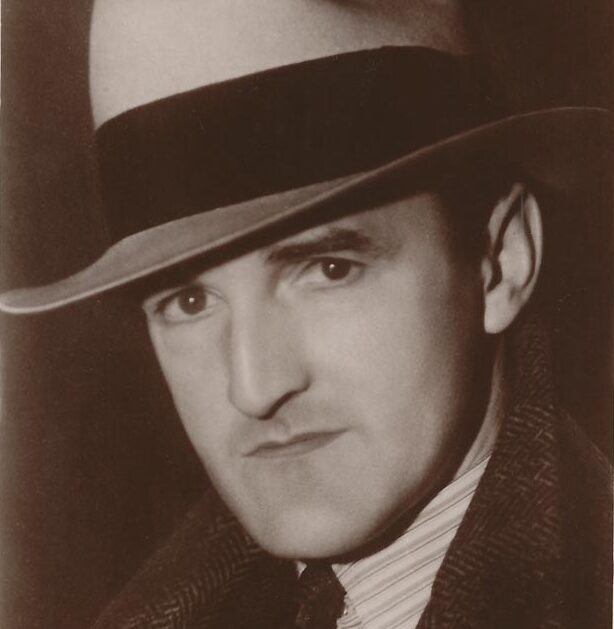
“I Fell for You.” Composed by Rowland Leigh (words) and William Walker (music) for Charlot’s Masquerade (1930). Recorded in London on October 4, 1930 by Percival Mackey and His Band with vocalist Maurice Elwin. Columbia CB-145 mx. WA-10736-2.

Personnel: Percival Mackey dir. Jack Jackson-Andy Richardson-t / Ben Oakley-tb / Chester Smith-another?-cl-as / George Smith-ts / Dave Fish-vn / Pat Dodd-p / Bob Martin-bj-g / Jim Bellamy-bb-sb / Bill Harty-d / Maurice Elwin-v

Percival Mackey and His Band (v. Maurice Elwin) – “I Fell for You” (1930)

Percival Mackey’s version of “I Fell for You,” with its Maurice Elwin vocal refrain, starts out in a most impressive, stately fashion, and until we hear the lyric, it does not sound ridiculous in the slightest. Like “Who Cares?” “I Fell for You” comes from André Charlot’s sophisticated, short-lived Charlot’s Masquerade (1930) and has the same lyricist, Rowland Leigh. The song was introduced on stage by actors Constance Carpenter and Patrick Waddington, and we are fortunate to have a record of Waddington himself singing it to the piano accompaniment of Peggy Cochrane and William Walker (the song’s composer). The complete song is very witty, but I think the funniest lyrics have been fully preserved in the arrangement that Percival Mackey uses:

I fell like an apple from an apple tree,
I fell like a Dutchman in the Zuiderzee,
I fell like a Scotsman falls for £sd
On the day I fell for you.

(As an American, I had to think a little bit when I first heard that verse. “Ell-ess-DEE” refers to the symbols for pounds, shillings, and pence, and not the popular hallucinogenic drug, and Scotsmen were once reputed to be thrifty, if not stingy or miserly. Apparently Maurice Elwin, a Scot himself, was being a good sport that day.)

The lyrics continue in that vein, using bathetic similes involving falling, literally or metaphorically, to describe the act of falling in love. Elwin seems to be doing something comparable to telling a joke with a completely straight face; he sounds earnest, as if he does not know in the slightest how silly he sounds. He is all enthusiasm and warmth.

Another British dance band version recorded of “I Fell For You” in 1930 was that of Jack Leon (v. Jack Plant). Ray Noble had recorded an instrumental version of it in a medley of songs from Charlot’s Masquerade.

Carroll Gibbons

“Try a Little Tenderness” (1932)

“Try a Little Tenderness.” Composed by Jimmy Campbell, Reg Connelly, and Harry Woods (1932). Recorded in London on December 1, 1932 by Carroll Gibbons and the Savoy Hotel Orpheans with vocalists Maurice Elwin and the Carlyle Cousins. Columbia CB-546.

Personnel: Carroll Gibbons-p dir. Bill Shakespeare-Billy Higgs-t / Arthur Fenoulhet-t-tb / Paul Fenoulhet-tb / Sam Acres-tb / George Melachrino-cl-as-vn / Laurie Payne-cl-as-bar / George Smith-ts / Ben Frankel-vn / Sid Bright-2nd p / Harry Sherman-g / Jack Evetts-sb / Rudy Starita-d-vib-x / Maurice Elwin-The Carlyle Cousins (Cecile Petrie-Pauline Lister-Irene Taylor)-v

Carroll Gibbons and the Savoy Hotel Orpheans – “Try a Little Tenderness” (1932)
(Courtesy of Charles Hippisley-Cox)

Some musical compositions have inherent flaws, while others, as a result of their success, acquire unpleasant associations over time. I would argue that “Try a Little Tenderness” actually falls into both categories. By making overly general psychological observations about women, it risks sounding patronizing and heavy-handed. Moreover, there is something about the tune and the lyrics that encourage saccharine performances.

Some renditions appear to be more than a little aware of the song’s cloying tendencies. I think particularly of the intentionally awkward title sequence of Kubrick’s 1964 film Dr. Strangelove, in which a rather syrupy instrumental version of the tune is played over images of a nuclear bomber being fueled by another plane’s flying boom in a manner inviting Freudian interpretation. Then there is the 1958 recording of Dragnet star Jack Webb speaking the lyrics in his trademark stiff, dead way over overproduced orchestral music (by way of a joke, presumably, although it is not clear that Webb himself was in on it). These sorts of offbeat uses of a tune can be very entertaining, but they can also forever ruin our ability to enjoy it unironically.

Carroll Gibbons’s 1932 version of “Try a Little Tenderness” rescues the song for me, serving as a sort of musical palate cleanser and reminding me of what was good about the original composition. The whole recording is imbued with the elegance one expects from the Savoy Hotel Orpheans, and Maurice Elwin is exactly the right singer to deliver the song’s prescriptions for harmonious human behavior. His tone of sincerity and sympathy brings out what is admirable in the lyrics, and the alternation between his voice and those of the Carlyle Cousins is sweet, light, and playful.

Other British dance bands who recorded “Try a Little Tenderness” in 1932-1933 were Jack Payne and His Band (v. Jack Payne), Ray Noble and His Orchestra (v. Val Rosing), Ambrose and His Orchestra (v. Sam Browne), Jack Hylton and His Orchestra (v. Pat O’Malley), Billy Cotton (rejected by Regal Zonophone), and Syd Roy and His R.K.O.lians (v. Sam Browne), and Oscar Rabin and His Romany Band (v. Sam Browne; on Sterno and 4 in 1).

Arthur Lally

“Jus’ Keepin’ On” (1930)

There is a curious relationship between Maurice Elwin, the Rhythm Maniacs, and the odd, forgotten song “Jus’ Keepin’ On.” The Rhythm Maniacs are the only musicians I have identified who recorded it. What is more, they recorded it at three different sessions, each time giving Maurice Elwin more time to vocally express its bizarre, plodding themes of exhaustion and resignation.

“Pantomime Hits — Selection — Part 1” (Intro. “Jericho” / “You’re My Silver Lining of Love” / “Jus’ Keepin’ On”). Recorded in Chelsea, London on November 27, 1929 by Philip Lewis and His Orchestra (a.k.a. the Rhythm Maniacs) under the musical direction of Arthur Lally with vocalist Maurice Elwin. Decca F-1585.

Personnel: Arthur Lally-cl-as-bar dir. Sylvester Ahola-Dennis Ratcliffe-t / Ted Heath-tb / Danny Polo-cl-as / Johnny Helfer or Joe Crossman-cl-ts / Claude Ivy-p / Joe Brannelly-bj / Tiny Stock-bb / Max Bacon-d-vib / Maurice Elwin-v

Philip Lewis and His Orchestra (a.k.a the Rhythm Maniacs; v. Maurice Elwin)
“Pantomime Hits — Selection — Part 1” (1929)
(Transfer by John Wright)

The first recording was on November 27, 1929, where “Jus’ Keepin’ On” was the last element in the issued medley “Pantomime Hits — Selection, Part 1.” It is worth noting that Elwin sings the lyric conventionally, sticking to the melody. His voice is soft and he sounds slightly weary, but there is nothing resembling overacting going on.

On December 16, the Rhythm Maniacs would record two rejected takes of the whole song. It is worth noting that in take 1 Maurice Elwin sings a fairly straight version of the tune before launching into a declamation about halfway through the song that is intoned, not sung. The last third of the first take is a fairly uninspired instrumental treatment of the refrain.

“Jus’ Keepin’ On.” Composed by Alexander Phillips (a.k.a. Van Phillips). Recorded in Chelsea, London on January 16, 1930 by the Rhythm Maniacs under the musical direction of Arthur Lally with vocals by Maurice Elwin. Decca F-1586 mx. MB-765-3.

Personnel: Arthur Lally-cl-as-bar dir. Sylvester Ahola-Dennis Ratcliffe-t / Danny Polo-cl-as / Joe Jeannette-cl-ts / Claude Ivy-p / Joe Brannelly-bj / Tiny Stock-bb / Max Bacon-d-vib / Maurice Elwin-v

The Rhythm Maniacs – “Jus’ Keepin’ On” (1930)
(Transfer by Henry Parsons)

The issued third take (recorded on January 16, 1930) has Elwin very much in the foreground for almost the entire recording. If he was ever at risk of being a little histrionic, he is here in this remarkable recording (although perhaps we should reserve a place of honor for “I’m the Medicine Man for the Blues”). He sings, declaims, and sings again, dominating almost the entire booming, high-gain early Decca recording. I have the feeling that Arthur Lally must have come to the realization that the underlying composition was not really all that good, but that it would be incredibly funny to have a normally subtle vocalist bellow it out. By having Elwin ham it up a bit for comic effect, Lally (presumably) rescued what would otherwise be a rather wearying song about weariness.

I should add that, vis-à-vis declaiming lyrics in place of singing them, there is a reason we might lump Elwin’s performance in the Rhythm Maniacs’ “Jus’ Keepin’ On” together his two interpretations of “I’m the Medicine Man for the Blues.” It would appear that Elwin went through a phase of imitating Ted Lewis, who introduced the latter song, and who, being a poor singer, was prone simply to speak lyrics, often in an odd, sentimental way, with slight diversions and repetitions. I hear Maurice Elwin doing the same in many of his solo Zonophone and Decca recordings of this period. I look forward to eventually sharing some of them on this website.