“Yodel-O-Eskimo.” Composed by Joe Pearson and Harry Stogden. Recorded c. February 2, 1931 by George van Dusen and Maurice Elwin. Parlophone R-1000 & Regal Zonophone MR-1906 mx. E-3912-1.
When commemorating milestones in Maurice Elwin’s life and afterlife (today is his 127th birthday), I am always faced with a difficult choice. Should I share my thoughts on one of his many sublime dance band recordings? Should I surprise my readers with a lesser-known solo recording? Or should I share something considerably more outré that attests to his good sense of humor and his willingness to record virtually anything as long as it paid? Put that way, the latter choice seems obvious, so I will turn my attention to an instance of Elwin’s propping up a novelty yodeling act with the strength of his excellent singing.
Yodeling is a technique of alternating the voice between the natural and falsetto ranges to produce a warbling effect; it is found around the world, but in European contexts it is most often associated with Swiss cowherds and other such people. Originally a way of calling out to animals, yodeling does not usually involve conventional language, but rather comparatively nonsensical vocalizations. I like to think of it as “Alpine scat.” For Anglophone audiences, yodeling may be generally considered an acquired taste, but it does appear to have been somewhat in vogue in the early 1930s. Perhaps the popularity of Jimmie Rodgers’s cowboy yodeling from the late 1920s onward had opened people’s minds to the art form’s potential.
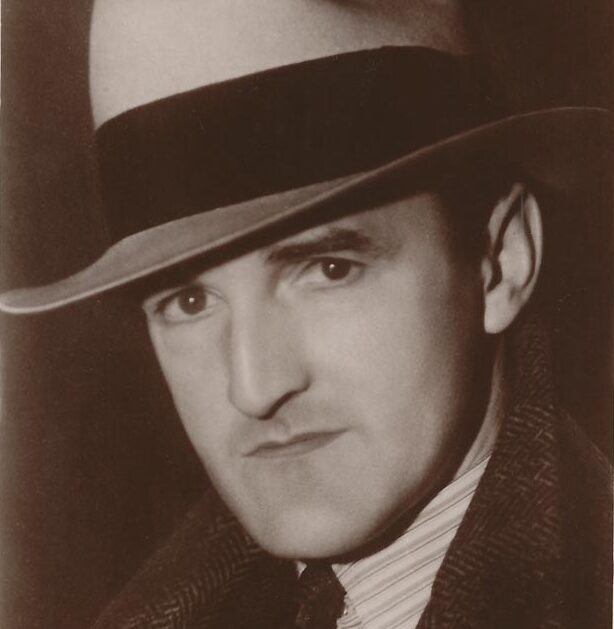
Thomas Harrington (1905-1992) spent more than half a century sharing his love of Alpine yodeling with the British public,1 starting his music hall career in 1921 at the age of 16. He always worked under pseudonyms, the most common of which was the one used on “Yodel-O-Eskimo”: George van Dusen, the Great Dutch Yodler. He recorded quite a few records, and there are nine known sides where he is joined by Maurice Elwin, whose singing voice van Dusen acknowledged to be stronger than his own.2 On this particular record, Elwin does all of the singing, and van Dusen only provides the yodeling. The usual rule seems to have been for van Dusen alone to be acknowledged on the label; only on Parlophone R-1080 is Elwin credited (as John Curtis, his usual Parlophone pseudonym).
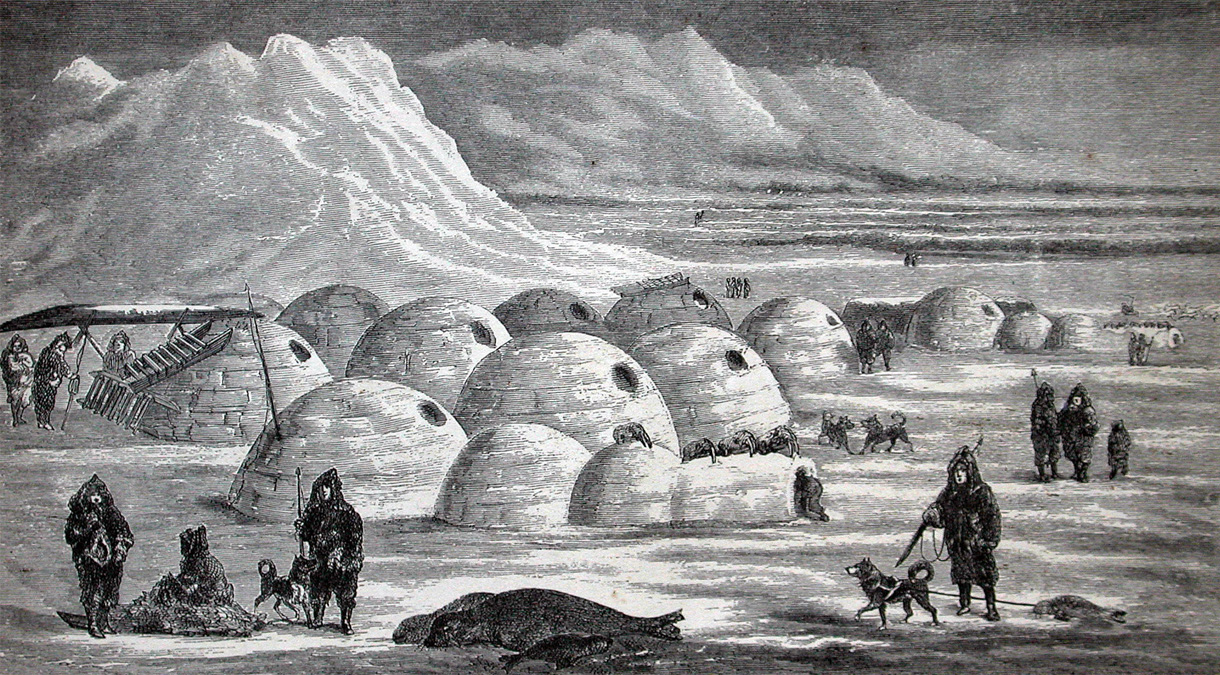
van Dusen seems to have populated the record catalogues with various attempts at driving home the universal appeal of yodeling. He recorded “The Yiddisher Yodeller,” “The Yodelling Chinaman,”3 “The Yodelling Bullfighter” — the list goes on. “Yodel-O-Eskimo” presents us with the story of Ice Pack Joe, an indigenous Arctic person who hears yodeling over the radio and is inspired to imitate it. The concept of the song is ridiculously simple, and there is little attempt at understanding or even stereotyping Northern peoples; the lyrics mostly just reiterate how cold it is where they live. van Dusen even recorded a follow-up to “Yodel-O-Eskimo,” “The Wedding of Eskimo Joe” (without Elwin). The silliness of the underlying concepts for these songs is apparent: van Dusen just wants an excuse to yodel, so he is not bothered by the complexity of an Englishman (Thomas Harrington) pretending to be a Dutchman (George van Dusen) pretending to be an Inuit (Ice Pack Joe) pretending to be a Swiss yodeler.
What makes this record worth having, though, is Maurice Elwin’s wonderfully mock-sincere delivery of the lyrics. The contrast between his careful diction and van Dusen’s awkward vocalizations is simply hilarious. It is hard to imagine Elwin keeping a straight face during the recording; it is easy to imagine him smiling all the way to the bank, though. “Yodel-O-Eskimo” is just one extreme example of how he was admirably willing to lend a hand in the production of music of all genres.
- Rick Hardy and Arthur Badrock. “George van Dusen: A Life by Rick Hardy; A Discography by Arthur Badrock.” Talking Machine Review 86 (Spring 1994): 2502-2505. ↩︎
- Ibid., 2504. ↩︎
- Apologies for the dated and now offensive exonym; for that matter, I understand that “Eskimo” is now frowned upon, as well. ↩︎